'The Importance of Being Earnest' Review

Date
March 13, 2026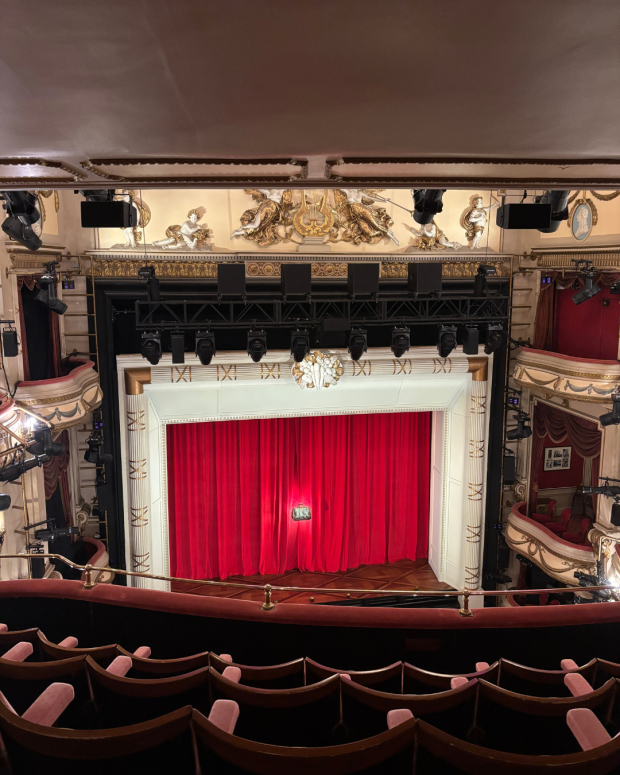
When I first learned my Theatre class was going to see Oscar Wilde’s The Importance of Being Earnest at the National Theatre, I had doubts as to whether I would actually enjoy the two hour and forty five minute production. Once the show began, though, it was clear to me that what I was witnessing was something fresh and original. The play first premiered in 1895, one hundred and thirty years ago, and it is remarkable that a show so old, for lack of a better term, has stood the test of time. There are many reasons why the show still clicks with audiences today, including its exploration of identity, class, and societal expectations.
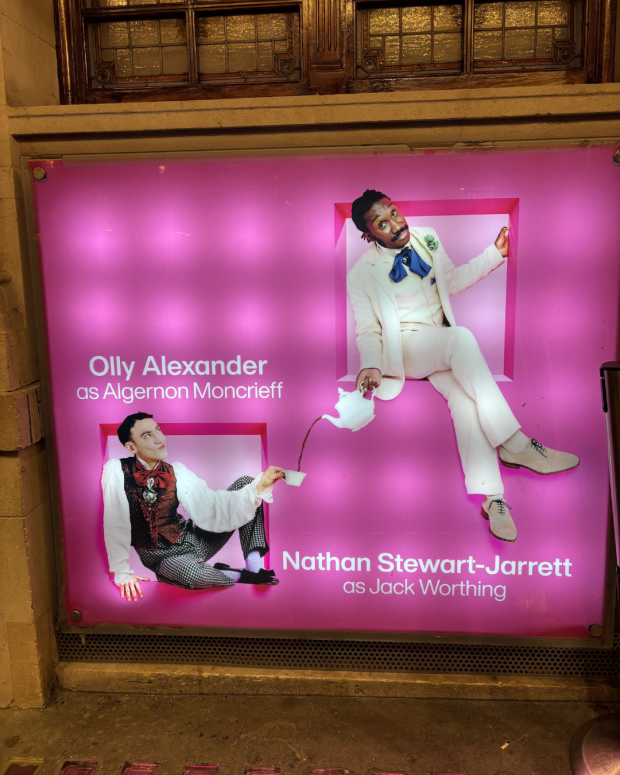
There was no platform for out gay actors to thrive when the show first premiered. Casting openly queer actors in the original production, like the stars of the current production at the Noël Coward Theatre, was unfathomable. Luckily, performances by lead actors such as Olly Alexander, Stephen Fry, and Nathan Stewart-Jarrett bring to life the queer and camp potential the show always had but was not fully realized until director Max Webster brought his production to the stage.
Wilde chose to rebel against societal norms through subtle details in the script, such as the use of the name Cecily, a term associated with male sex workers, or Jack’s cigarette case, a reference to Wilde’s own personal life, as he was known to gift cigarette cases to his romantic partners. Oscar Wilde’s comedy was, as he said, “written by a butterfly, for butterflies.” The messages were always there, but careful attention was required to catch them.
Wilde’s play has left a legacy of creative freedom in theatre, allowing shows to ignore the norm and defy expectations. He remained playful with his writing and did not change his style to appease audiences, which meant that by refusing to sell out, his plays endured. While The Importance of Being Earnest may seem relatively tame today, when it first premiered, even its critique of Victorian morality was considered controversial.
The show felt like a fresh take on a play written over a century ago that still stands the test of time. I was pleasantly surprised by how humorous the production was, and by how clearly it reaches a new generation through Webster’s direction, the actors, and the overall queer aesthetic of the current production. I will forever be grateful to my Theatre professor for building this experience into the curriculum.
These pieces were created by student contributors. The views and opinions expressed are their own and do not necessarily reflect those of Arcadia Abroad.