Community and Cultural Immersion: How to Find Your Place Abroad Through Food

Date
February 10, 2026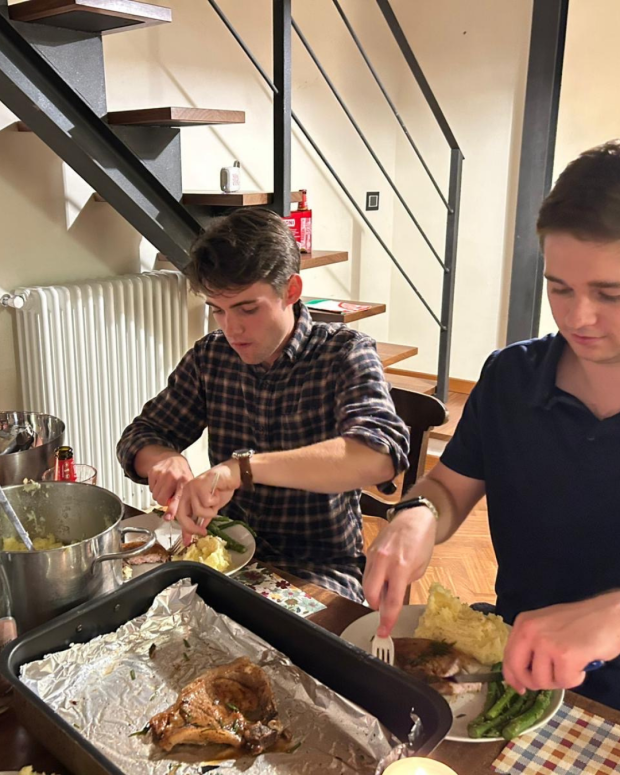
In December of 2025, right as I was about to leave from my study abroad program, Italian Cuisine was designated as an “Intangible Cultural Heritage of Humanity” by UNESCO. Learning this made me feel like I was part of something bigger, especially after I spent a semester in Perugia, Italy. Italian Cuisine is the first of its kind to hold the title, and rightly so; in the U.S., Italian restaurants make up the majority.
I found stable footing and my place abroad through food. Eating local foods from local restaurants, seeing places of agriculture and partaking in the food-making process, and cooking with my roommates and friends also gave me a sense of self and understanding.
Food is not something we simply inhale three times a day for sustenance: it’s a mode of communication that tells others who we are, what we value, and where we are from. I can only hope future students use food as a conduit for experience because it is such an integrated part of life all around the world.
There are two experiences in particular that gave me a sense of place in a new country and established my sense of self abroad: a field trip to a farm near Passignano sul Trasimeno and cooking with my friends.
- Passignano sul Trasimeno day trip
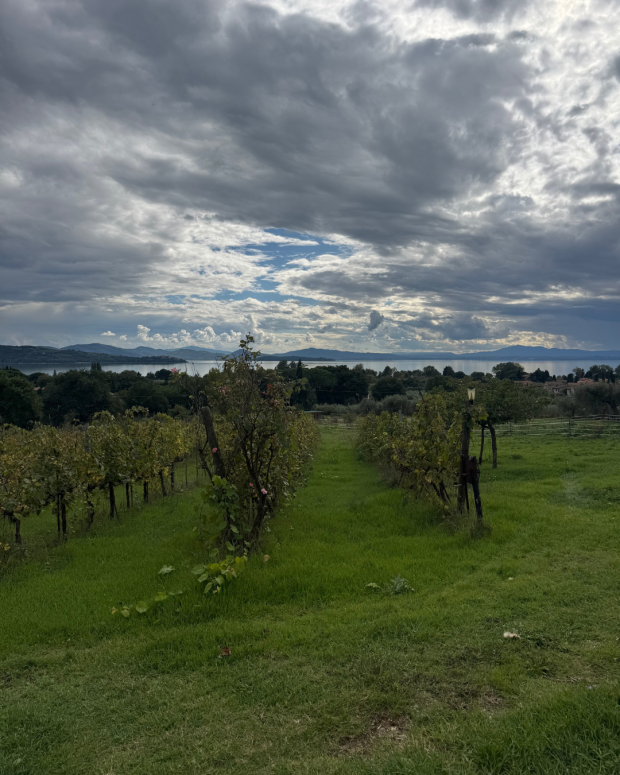
On a chilly day in late September, seven students from my study abroad program packed into a van headed to a farm near Lago Trasimeno. There, we met with a group of students from the Arcadia program in Sorrento and with the farm owners who had a partnership with Arcadia. This program and similar ones are offered every semester.
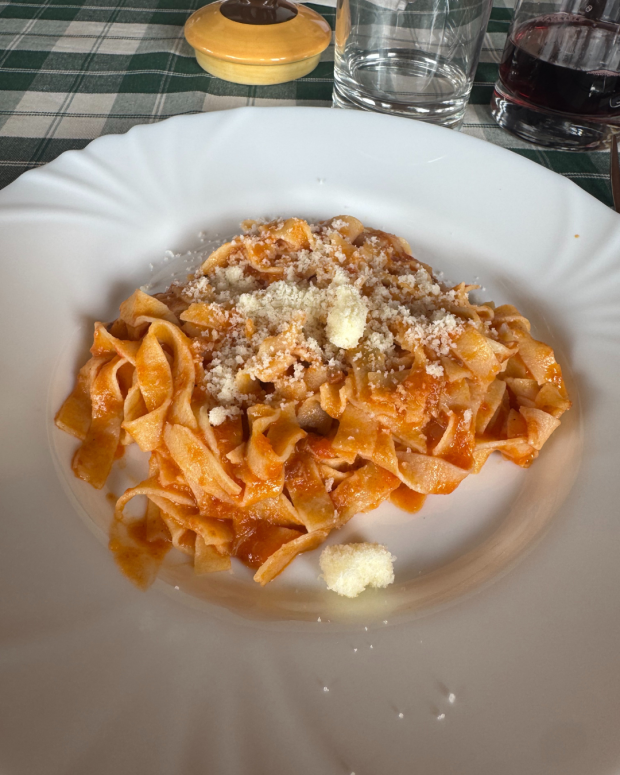
Despite beginning with a three-course meal, the experience was more than eating. After a plate of various bruschetta, a tagliatelle pasta, and pork slices with potatoes, we toured the family-owned farm and had a hands-on experience (harvesting regional beans and making our own tagliatelle). To me, the interaction with the farm was just as meaningful as the food to the meal.
Everything from the harvesting to the making is a lesson. We learned a history of the region and of the farm. Farms like the one we visited make efforts to grow local varieties which support biodiversity and re-connect them to their heritage.
Although Socrates saw indulgence in food as a vice and saw eating as solely a means of survival, I see it as something else: a communal activity that defines identity. For the farm we visited, food was a means of preserving history, sharing their story, and constantly bringing new life to tradition. Above all, we are only visitors while studying abroad; if you want to be more than an observer, one way to do it is not just eating the food but making it and interacting with the people who grow it. - Cooking with my friends
At the end of my abroad experience, I asked a few students if they ever cooked for and with their roommates. The common answer was no. If people did know how to cook, it isn’t uncommon that everyone has different schedules. Creating an agreeable schedule to do that is a hard task, and I don’t blame anyone for being unable to do it. That being said, if you can make it work, it’s worth it.
One thing I will always recommend to students about to go abroad is this: cook with and for your roommates. Cooking is a great opportunity to share your story and hear the stories of your new friends. This, above all, gave me a sense of place and self abroad and made me closer with others. A sandwich was really a story about learning how to cook; a soup was a story about heritage.
We also got to create shared memories that I will cherish forever. I find myself looking back at nights like bolognese night or chili night, nights where we cooked for ourselves and invited others over. To me, those weren’t just an opportunity to get together but a moment to reflect on what we eat, how we eat, and why. Italian culture recognizes this, too; the Mediterranean diet is based around the community aspect of the meal.
In short, food is a powerful mode of sharing. Humans have always communicated through and with food. For us, cooking together was a bonding experience and an opportunity to immerse ourselves in Italian culture. We learned new stories and told stories by cooking. It was a powerful experience and an essential piece of my study abroad experience.
These pieces were created by student contributors. The views and opinions expressed are their own and do not necessarily reflect those of Arcadia Abroad.