Meet Me at the Bookshop: A Visit to Past Shelves, Histories of Queer Reading Exhibition at the Museum of Edinburgh
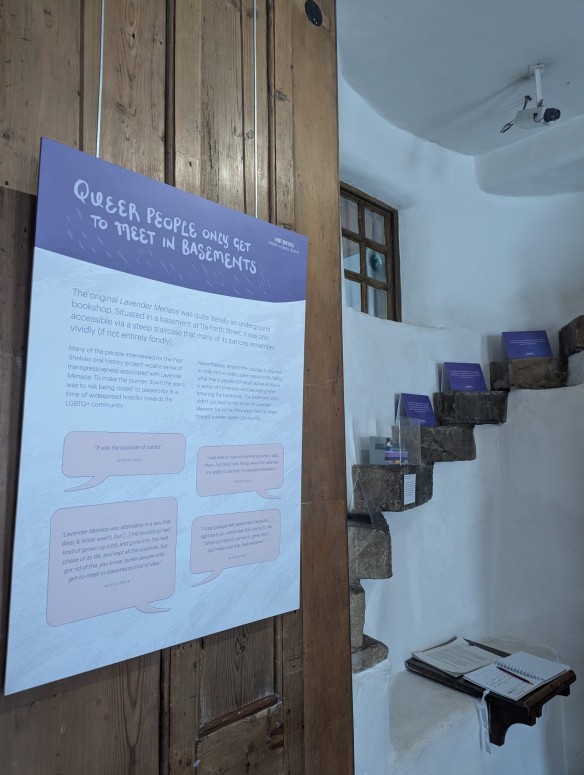
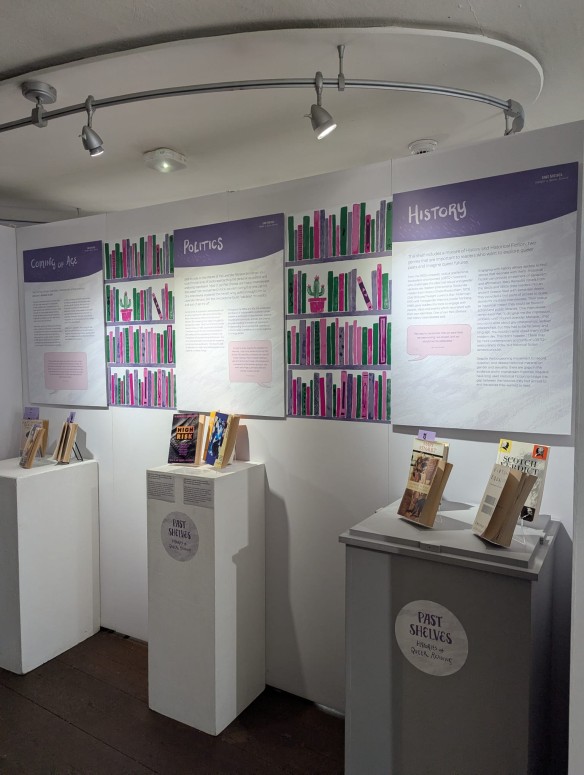
Have you ever stepped into a bookshop and felt immediately at home? Or sat in the quiet of a story-lined library and felt your spine soften, tension releasing as the stories of others reach out to cradle you? If this even remotely resonates, I’d suggest a visit to the Past Shelves exhibition.
Books, stories, they’re an intrinsic part of humanity, of our history and our communities. They record, inspire, soothe and explain. It is this lens that Lavender Menace Queer Books Archive applies in their exhibition. Past Shelves is a love-letter, or perhaps a whole romance novel, to the transformative power of LGBTQ+ books, reading and the communities it brings together.
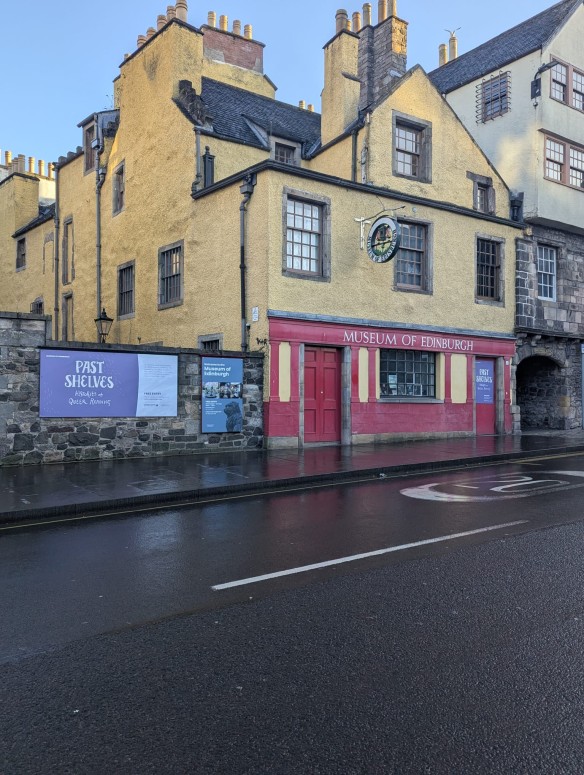
Hosted in the higgldy-pigldy, 16th century building that houses the Museum of Edinburgh, you immediately feel ensconced in a story. The exhibition spans three rooms of the museum, the foyer, the Huntly Room upstairs and the Costume Gallery. All are woven through the permanent displays, enfolding the queer history of Edinburgh with the ‘mainstream’ heritage of the city.
The exhibition focuses on queer books, bookselling and publishing from 1980s-2000 in Edinburgh. It tells the story of Scotland’s first gay and lesbian community bookshop, Lavender Menace, co-founded by Bob Orr and Sigrid Nielsen, that opened in 1982. The follow-on was West & Wilde (1987-1997) owned by Bob Orr and Raymond Rose. Whilst Lavender Menace was a small community shop in a basement retail unit, West & Wilde was more commercial and more visible. Co-owner Raymond Rose spoke at a recent event about how the shop sign, the Georgian ceiling cornices, and the bookshelves all were purposefully chosen to give the shop an air of New Town establishment. The aim was to make the shop feel like it had always been there, just as queer people have always been present. Lavender Menace and West & Wilde was then reborn as a Queer Books Archive in 2019, based in St Margaret’s House in Meadowbank. The importance of these shops, not just as spaces where you could purchase LGBTQ+ books that would not be stocked elsewhere, but also as community spaces, is highlighted in Lavender Menace’s Oral History Project. This project saw patrons of the shop, writers and activists all be interviewed and asked what queer books and the bookshops meant to them in the 80s and 90s in Edinburgh, and it is these intimate testimonies that the exhibition begins with.
In the foyer, in the first room of the exhibition I slip on a pair of headphones and have different stories murmured to me. About the courage it took to descend the steps down into Lavender Menace for the first time, worried about someone else seeing them. Another interviewee talks about hours lost at Lavender Menace, ‘but of course it was not lost’ she says, ‘it was found.’
I can almost feel a hand on my shoulder, like an older relative gently guiding me through as if to say ‘you thought your generation invented it all? Come and see how we did things in my day kiddo.'
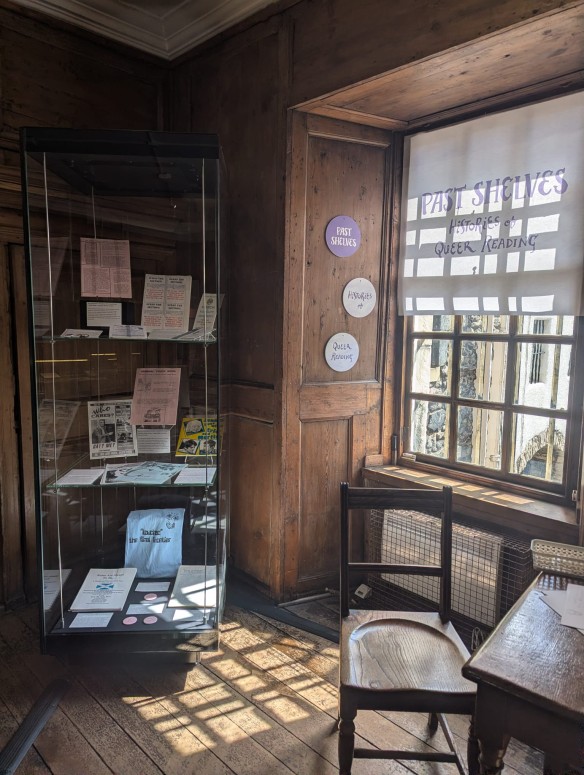
After listening to the oral history clips I look at panels that queer common book genres, Politics, Horror, History and corresponding books from the archive. There are also bookmarks where guests can write their own feelings about the books. Interspersed between the books and panels are archival materials from Lavender Menace and the City of Edinburgh Council’s own archives, posters for events and protests give real-world context to the fictional worlds of the books.
Climbing the spiral staircase, I find the second room of the exhibition. A striking oil-painting painting by Peter Thomson, Little Foxes, is a sobering reminder of some of the harsh realities of LGBTQ+ life: a crucifix holding man hurts another amongst the leafy tendrils of Calton Hill, formerly a popular cruising spot for gay men in the 1980s. Whilst a torchlit mob descends from the town and foxes dart away from hounds. Indeed, homophobia makes an intrusion into the exhibition through a guest book quote: ‘out of context in this building, nothing to do with the history of Edinburgh.’ Of course, it has everything to do with Edinburgh. As other visitors pointed out in reply in the guest book, queer history is history, it happened and it cannot and should not be rejected or sidelined when we talk about the history of Edinburgh.
Quotes pulled from the oral history testimonies display the reality of queer history in Edinburgh and these breathe life into the ephemera and objects in the display cabinets.
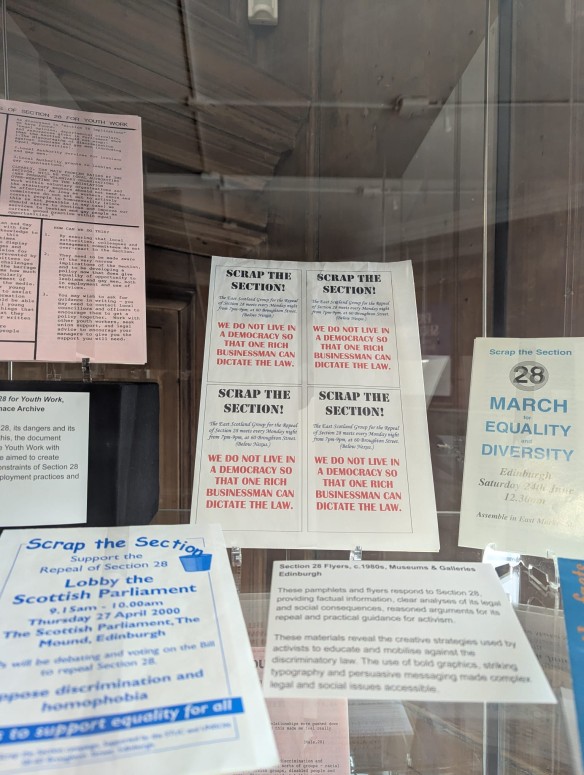
Zines, magazines and posters and newspaper articles chronicle what LGBTQ+ life was like in Scotland in the 1980s, editions of feminist magazine Spare Rib sit next to the Tartan Skirt, a self-published zine for the transgender community of Scotland full of useful advice such as where you could go to buy clothes where the sales assistants were kind and information on community spaces. There’s even a section on fanfiction and the importance of the ability to write yourself and your community into popular fiction. Soberingly, advisory pamphlets on how to fight against Section 28 are also on display. Section 28 was a Maragret Thatcher era piece of legislation that prohibited UK local authorities from "promoting" homosexuality or teaching the acceptability of homosexuality as a "pretended family relationship". This did unspeakable harm to the LGBTQ community, especially as it was introduced in 1988 during the height of the AIDS crisis, and was not repealed until 2004. The shadow of such repressive legislation unfortunately is not banished to history just yet.
Materials advising on safe-sex sit in another glass cabinet, LGBTQ+ communities often had to look after themselves during the AIDS crisis, stigma and homophobia leaving people often with little option than to teach each other how to be safe. There are diaries covered in political stickers with slogans common to the 80s and 90s ‘Resist the poll tax’ ‘Coal not dole’. The history of our queer relatives and recent ancestors sits in the room, as I walk through I can almost feel a hand on my shoulder, like an older relative gently guiding me through as if to say ‘you thought your generation invented it all? Come and see how we did things in my day kiddo.’
The museum context can defang or depersonalise objects, even the most lurid political slogan can feel toothless when sat in a display cabinet. Yet this exhibition does something quite different, it feels like it’s for us and with us, perhaps especially for me due to the personal connections I have to the team who curated the exhibition. But it is clear the stories highlighted in the exhibition speak for themselves, and the myriad exclamations of joy and connection in many different languages from visitors in the guest book make it clear that this is an exhibition for us all. This is not a rainbow-slathered Pride month attempt at diversity, the care and intimacy in the collection of objects and stories is plain to see, easy to feel.
Anna Broomfield, the coordinator of the Lavender Menace Oral History Project and the co-curator of the exhibition, provided a summary of the importance of the exhibition;
‘It's been incredible to see our community's response to Past Shelves. We really wanted to pay homage to the work of those who came before us, to share their stories and to demonstrate the importance of queer books and community spaces. I hope the exhibition helps people to feel seen, and to take strength in the knowledge that we have always been here.'
This exhibition is a reminder, and a call to action, that we stand on the shoulders of giants and should strive to be giants ourselves.
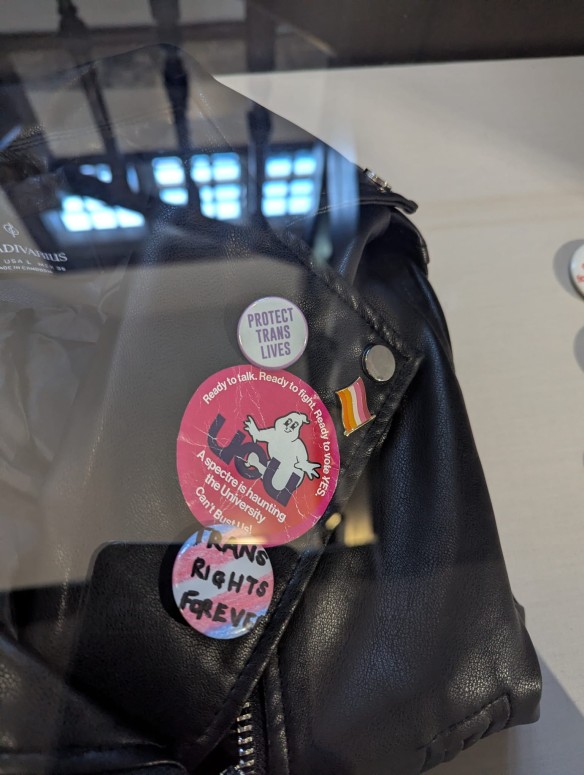
And sure enough, the end of the exhibition in the Costume Gallery gives physical representation to those giants. Standing in front of the glass of the gallery you are greeted by mannequins, a literal representation of our queer relatives. Oh there you are, I think, as if the whole exhibition has been leading to meeting them. A nun’s habit from the secular order of drag nuns, The Sisters of Perpetual Indulgence sits next to a crown bestowed by them during a blessing on Jo Clifford, acclaimed Scottish playwright. Along with other costumes and, an essential for any modern LGBTQ+ person, a leather jacket covered in political pins and badges. The crown, coupled with the display case of political badges, gives the exhibition a triumphant end. Taking on a bit of the swagger of the pinned leather jacket, the playfulness of the nun’s habit and the pride of the golden crown, I wander back out into the sun on the Royal Mile, feeling rooted in the city and its history.
Opening hours: The exhibition runs 5 March to 3 May. In March, the museum is open Wednesday to Sunday. In April/May, it is open every day. It is Free admission.
Find out more about the exhibition and Lavender Menace here.