Munro Bagging in Scotland this Spring

Date
March 18, 2026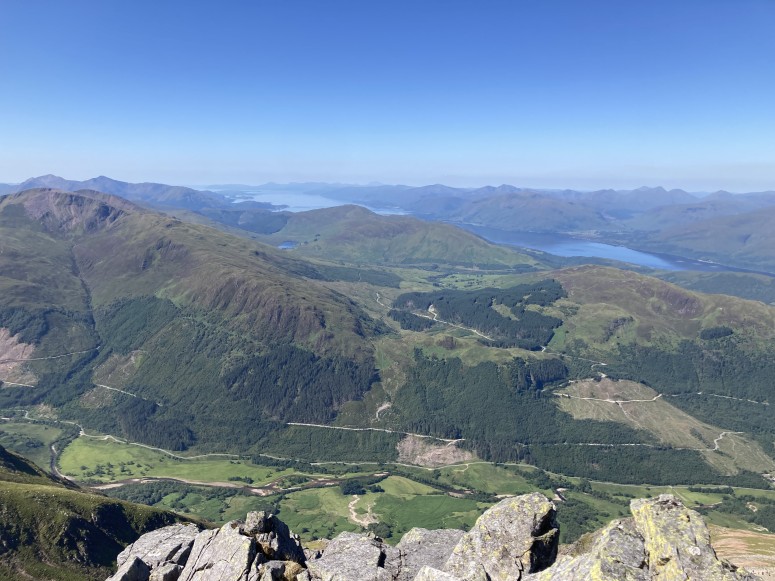
With the welcome arrival of longer days and better weather, Spring is the ideal time to explore Scotland’s great outdoors. Hillwalking (or hiking as you say in the US) is one of the most popular outdoor activities in Scotland, with an estimated 40% of visitors completing a hill walk during their visit. Edinburgh-based students will already be familiar with Arthur’s Seat, whilst a semester in Stirling would not be complete without conquering Dumyat, but what if you’re looking for a bigger challenge?
‘Munro Bagging’ is the feat of climbing all 282 mountains in Scotland over 3,000 feet. The popularity of ‘Munro Bagging’ is partially due to the accessibility of many of Scotland’s mountains. Only a few require actual rock climbing, and many can be completed in only a few hours. Nonetheless, climbing a Munro is a serious undertaking and you should consider a few things before you go.
What’s in the name?
The Munros are named after Sir Hugh Munro, 4th Baronet of Lindertis, an aristocrat, traveller, and founding member of the Scottish Mountaineering Club. Sir Hugh came from a family of wealthy tobacco merchants, soldiers, and colonial administrators, so with his family’s fortune and prestige safely secured, he could focus on the more “leisurely” pursuit of mountaineering. In 1891, Sir Hugh published what he believed to be a substantive list of all mountains in Scotland above 3,000 feet. At the time it was thought that there were around thirty such mountains in Scotland, but Sir Hugh’s table included some 300 peaks, thus ‘Munro Bagging’ was born. Unfortunately, Sir Hugh never lived to climb all the mountains on his list, being just one short at the time of his death during the 1919 Spanish Flu pandemic. Over the last century or so, the number of Munros has changed as modern topographical techniques have promoted some mountains to Munro status, while others have been relegated to the humorously named ‘Marilyn’ category. As of 2026, there are 282 mountains classed as Munros, with the most recent Beinn a' Chroin only being added to the list in 1997, whilst poor Sgùrr nan Ceathramhnan lost its status in 2020.
Although only about 1% of the Scottish population speaks Gaelic, when it comes to Munros we prefer to use their Gaelic names (but don’t worry even most Scottish people struggle to pronounce some of the trickier named hills). A surprising number of Munros have some variation of the unimaginative name “Big Hill”, such as Ben More, Creag Mhor, or Sgurr Mor. So perhaps using Gaelic helps to retain their romantic appeal. Other Munros derive their name from the local terrain such as Sgurr na Lapaich (‘Hill of the Bog’) and Sgurr na Carnach (‘Peak of the Stony Place’). A few more interesting names include Schiehallion (‘Fairy Hill of the Caledonians’ also the name of a craft beer), Creise (simply called ‘Fat’ due to the mountain’s stocky build), Sgòrr nam Fiannaidh (‘Hill of the Fair Haired Warriors’ apparently where Fionn Mac Cumhaill defeated a party of Viking raiders), Sgurr a’Ghreadaidh (‘Peak of Torment’, not for beginners!), and Bod an Deamhain (politely translated into English as ‘The Devil’s Point). My personal favourite name, however, is Sgùrr nan Spainteach (‘Hill of the Spaniards’), a subsidiary top of Sgùrr na Ciste Duibhe. The unusual name comes from a local legend that after the Battle of Glensheil in 1715, a group of Spanish marines fighting for the Jacobites hid from the pursuing British troops in the nearby mountains.
Before you go…
Although Scotland’s hills may seem relatively tame, there are several things to consider when climbing Munros. As you will be aware by now, Scotland’s weather can change quickly and without warning (indeed it can make you question the whole scientific discipline of meteorology). Mountaineers looking to tackle the more formidable Himalayas or the Alps often conduct their preliminary training in Scotland, not because of the physical difficulty of climbing our mountains, but because Scotland’s fickle climate makes ideal preparation for rapid changes in weather. Even if tackling Munros in the Spring, remember that the temperature on the mountain can be as much as 5 to 10 degrees celsius (40-50 Fahrenheit) lower than on the ground. Hillwalking in snowy conditions should generally be avoided for all but experienced walkers. Some of the higher Munros have snow on their peaks well into the Spring so always check before heading off. However, don’t be tempted to wear a large heavy jacket, as if it gets wet it will take longer to dry out, instead bring thinner layers but more of them. Waterproofs are essential too as are good quality walking boots and a spare pair of socks. Trainers (sneakers) may seem more comfortable for walking, but they lack the ankle support and durability needed for hillwalking. It’s also advisable to bring a hat and gloves even in warmer weather, it’s better to have them and not need them than need them and not have them. Solo climbing is not recommended unless you have a lot of experience in Munro bagging. A minor inconvenience such as a sprained ankle, not bringing enough water, or even a phone dying, could prove perilous when on your own. Even if hillwalking in a group, it's still a good idea to let someone on the ground (e.g. a friend or flatmate) know where you are going and when you plan to return.
Choosing a Munro
Consider that a Munro’s height is not always the best indicator of difficulty. Ben Nevis, the tallest mountain in Britain, is relatively straightforward for experienced hillwalkers due to a well maintained path from top to bottom. The same can be said for Cairngorm, as well as some of the other Munros near ski slopes, as despite their height they have well maintained routes and nearby facilities. Some of the hardest Munros are those with difficult terrain and remote geography, with their height being only a secondary concern. This is all the more relevant when hillwalking outwith summer, as the days are shorter and generally colder and wetter. Before tackling a Munro read the user guides on walkhighlands or similar websites as well as downloading or screenshotting the recommended routes. Daylight hours are very important when choosing a Munro, as you do not want to be climbing in the dark. Always consider the travel time there and back, as well as factoring in an hour or two in case you are delayed. Most Scottish universities have mountaineering and hillwalking clubs, so if you’re unsure on anything defer to the experts!
Keep an eye out for my follow-up blog with recommendations on a few of my favourite Munros.
These pieces were created by student contributors. The views and opinions expressed are their own and do not necessarily reflect those of Arcadia Abroad.