The never-ending story: learning my family’s history through the ages by Cole Morgan

Date
November 26, 2025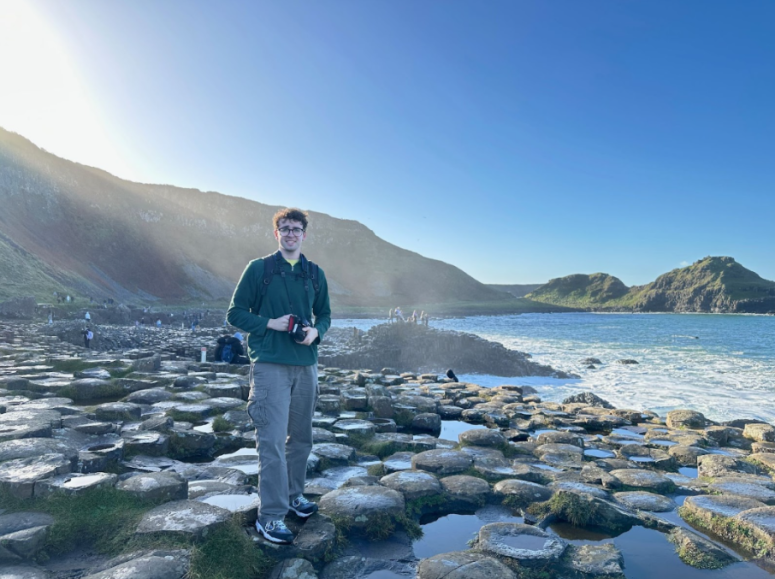
Is deas bualadh leat! My name is Cole and I’m a 3rd year from Northwestern University in Chicago and I’m currently studying abroad in Cork, the #2 largest (and the best) city in Ireland.
Through my studies at University College Cork, I’ve had the privilege of learning the Irish language and studying Irish literature, both of which have taught me a great amount about the country and its culture. While I felt drawn to study in Ireland because of my interest in the culture, I was also curious to explore a personal topic in the country: my family.
Like many Americans, I have Irish ancestry, and have always wondered where my family surname came from. My curiosity got the best of me last summer when I started going through and digitizing a boatload of old photos and papers that my family had kept for generations. As I preserved these photos I began to link faces and names to each other, drafting a rudimentary family tree as I went along. These are my grandparents of course, but that man has to be his brother right? I didn’t know he had a brother – and yet he looks just like this old man in the WWI uniform! Just like that, I fell face-first into the endless pastime of genealogy.
My older family members across the country received the digitized photos along with my multitude of questions. Was this my great-grandma? If she was from Czechoslovakia, where does the Irish side come from? I thought our last name was Welsh?
I kept a padlet scribbled with all the essential information: Full names, addresses, birth and death years, surnames, and maiden names. The work gets tedious once you get beyond what your family knows – I perused familysearch.org, irishgeneaology.ie, and rootsireland.ie, triple checking the census records, baptismal records, marriage certificates, and land evaluations with my information before downloading them and matching them to my family tree.
Irish genealogy itself is notoriously difficult due to the penal laws which prevented many catholics from keeping baptismal records as well as the civil war which burned up many of the census records from the mid-1800s. Catholic families would sometimes have their firstborn son convert to protestantism so he would legally be able to acquire the family land, leaving the rest of the children catholic. If your family belonged to the protestant Church of Ireland, which mine happened to, you may have more luck tracking your family’s whereabouts.
Once finding the county and parish of my great-great-grandfather, I was able to examine the Church of Ireland records and found the very church where he was baptised! Knowing the county he was from, I was able to contact one of the RootsIreland genealogical societies which exist in every county in Ireland, and they provided me with a research report on my family which helped me locate the very plot of land on which my family lived.
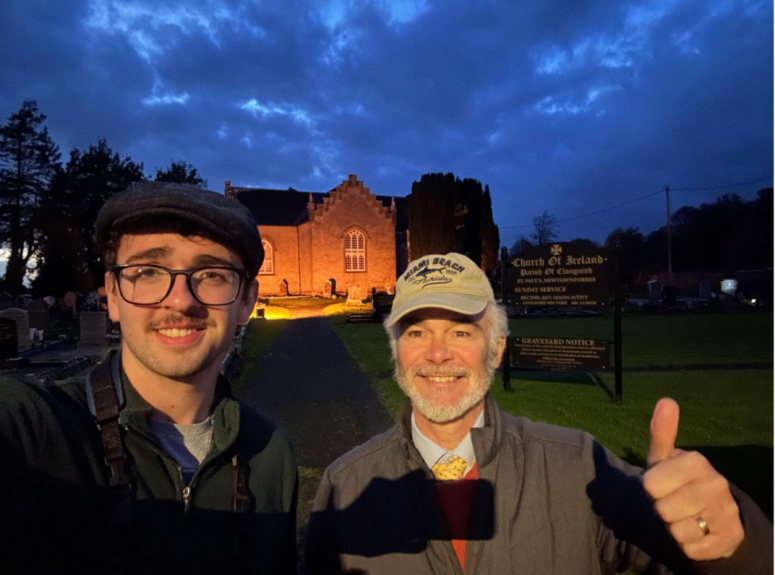
By a matter of chance, this report also got me in contact with a living relative! My 3rd cousin. In my time studying in Ireland I met him and his family in Dublin and we visited the gravesites of my emigrant ancestor’s siblings; we also got to see where they lived when they eventually moved to Dublin.
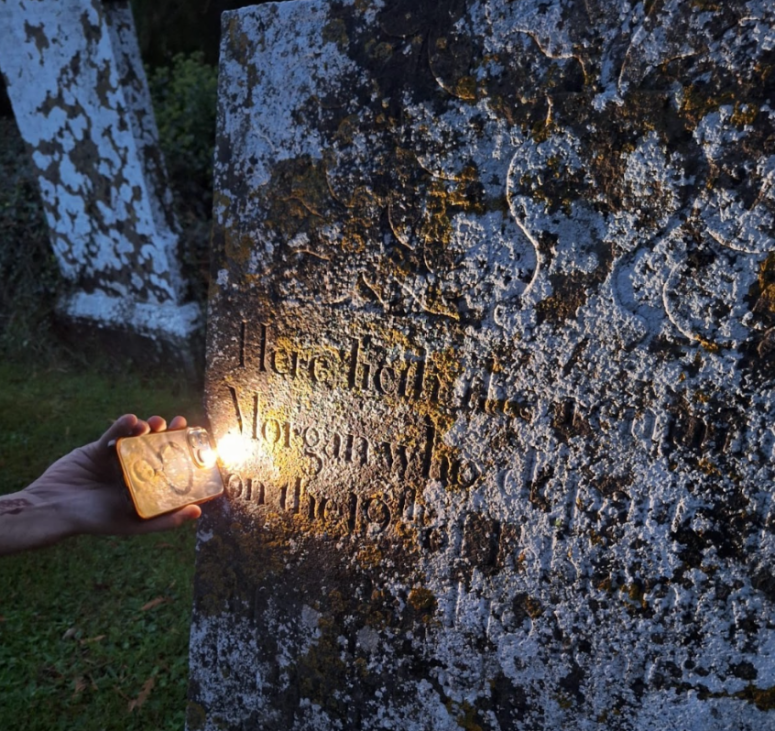
Later that weekend we took a trip up Longford town as well. We drove around the town and identified all the shared points in our family’s history: the town house where my 3rd great-grandfather lived, the plot of land where they once farmed, the churches which they would have attended – we even found tombstones dating back to the 1600s with my last name on it!
We had a great time and it was a huge privilege to explore the town where my family originated. For the first time in 150 years, our 2 branches of the family had finally reunited – it was a very special experience.
If you are curious about your Irish ancestry, you can follow the same process that I took, talking to living relatives and gathering pertinent information before exploring other resources for evidence. If your ancestry is more recent and you have a grandparent born in Ireland, you can even claim Irish citizenship!
Thanks for reading, and Irish or not, I hope this has inspired you to take a look into your family’s history – there is a lot of connection to be gained from knowing more about who you’re from!
Go n-eírí leat!
Cole Morgan
University College Cork
These pieces were created by student contributors. The views and opinions expressed are their own and do not necessarily reflect those of Arcadia Abroad.